Recaps
A guide to Na nože season 2: every restaurant and its story
· updated
Na nože season 2 (2023): the first knives arrive
Season 2 of Na nože premiered on 6 September 2023 and brought a major change: Martin Novák handed out knives for the first time. Each of the eight episodes now ends with a concrete score, from two to four knives, with no venue earning a perfect score or a zero. Martin worked his way across Slovakia, from a roadside motorest near Hliník nad Hronom through a former bank in Kolárovo to idyllic Marianka near Bratislava. The public is kinder to these places: on Google they average 4.31 out of 5. Seven of the season's restaurants are still running today, one sadly did not make it. Here is the whole second season, restaurant by restaurant, and what really went on behind the kitchen doors.
Motorest na Hôrke (Hliník nad Hronom)
Season 2 opened at Motorest na Hôrke near Hliník nad Hronom, a classic roadside motorest that once burst at the seams, but after the motorway was rerouted the traffic passed it by and it ran at a loss for thirteen years. The boss, manager and cook all in one was Zdenka, a soft heart who kept the menu at five euros with soup and ran charity more than a business. On his first visit it all piled up: the broccoli soup was warm water reeking of burnt roux, the "sailor's" saute was dried-out pork with peach, and he found a hair in two dishes. The verdict was brutal: "In my 20 years in kitchens, that is the worst food I have ever eaten."
Since the whole team are mothers, Martin renamed the motorest Reštaurácia u mami (Mum's Restaurant) and bet on honest home cooking, cabbage soup, goulash, lentil stew with a meatball and roast pork neck with a bread dumpling, all served family-style in a shared pot. What mattered most was that the women pulled together and got the place moving right when Zdenka left on maternity leave. After the reset the car park is fuller, the fridges clean and people praise the food more, though the new menu has not fully caught on. Martin awarded 3 knives, while guests give it 4.1 out of 5 on Google.
The Bank (Kolárovo)
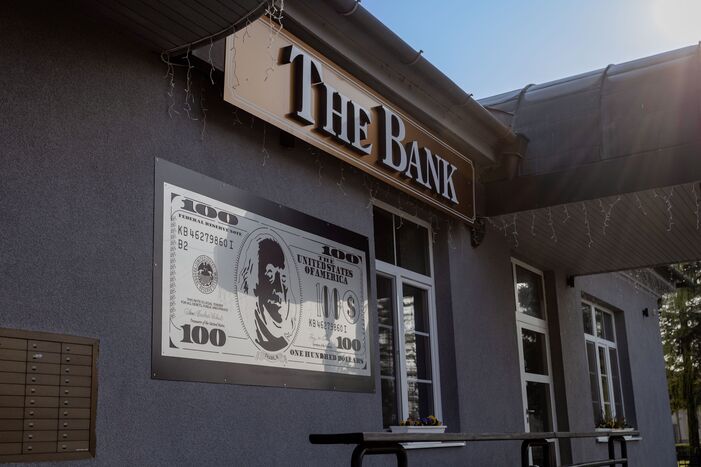
In Kolárovo, the restaurant The Bank sits in a former bank building, which is exactly where it got its name. The place is pretty and tidy but almost empty, because the main problem was the wait: up to an hour for the set lunch and forty to fifty minutes a la carte. Young manager Viktória felt disrespected and the team, with a heavy language barrier, had no leader. On his first visit Martin hit a menu with no identity, a "trip around the world via Hawaii", a ragu soup that looked "like hospital soup" and frozen sea bream defrosted in the microwave. The steak was surprisingly medium rare exactly as asked, but the bream flopped: "A miserable bream. Thumbs down."
Martin tidied the kitchen with a system of boxes and labelling, taught owner Laco that autonomy goes hand in hand with responsibility, and bonded the team at a team-building day where they built a life-size Formula 1 car together. The new menu was built on local fish, carp fries, sirloin with cauliflower puree and grilled catfish. On the return the team communicated and Žolt was calmer, but the letdown was that the owners wanted to keep the old menu and the unlucky bream still on the photo. Martin awarded 2 knives, one for the team's progress and one for food he enjoyed, warning that if things do not move he will rip the sticker off the door. Guests give it 4.5 out of 5 on Google.
Piti-Piti-Pá (Košice)
In the Košice shopping mall Optima, right by the cinema entrance, sits the film-themed restaurant Piti-Piti-Pá. Owner Wasim, a Prešov man with Assyrian roots, took it over from a friend, but turnover dropped by more than half and he was losing around fifteen thousand euros a month. The first visit brought a surprise: most of the food was good, a tom yam style coconut soup excellent, the steak exactly medium rare, the risotto creamy and honest. Weaker were a curry without real Thai ingredients and "tragically overcooked" macaroni. But the biggest problem was not on the plate, it was in the air: a quiet, tense staff and an empty restaurant while the neighbours were packed.
Martin named the root cause plainly, the place had no leader and the team was at war, so he promoted Laura to manager and brought in mentor Monika. The new concept leaned into Arabic and oriental cooking close to Wasim's heart: stuffed vine leaves, mutabal, moussaka, hummus, falafel, lamb cutlets and baklava. But head chef Kubo rejected the concept, and on the return Martin found only about three new oriental dishes had been added, with the schnitzels and Asian food still in place. Martin awarded 2 knives, one for adding anything at all and one for food he enjoyed, promising to swap the score if they dare to go fully oriental. Guests give it 4.3 out of 5 on Google.
Hotel Tulipán (Tatranská Lomnica)
Right under Lomnický štít in Tatranská Lomnica stands Hotel Tulipán, a hotel restaurant with a wellness and a gorgeous view, kept alive despite its prime spot only by school trips. Owner Peter, a former IT man, was carrying a loan in the hundreds of thousands of euros. On his first visit Martin flagged the long prep times and above all a deception: with the bandit's pocket dish he pulled out photos of the same meal his scouts had received as cold convenience food, while he now had a nice piece on the plate. "I feel so cheated," he concluded, after Peter admitted four people had been put on at once and the photos were dressed up.
Martin opened up the quiet chef Aďo, who grew up in a children's home, on a shared trip to pick spruce shoots, which they turned into a vitamin-C syrup nobody nearby had. He warmed the restaurant into a Tatra spirit with wooden paintings of the peaks and built a menu of pickled sheep cheese, veal goulash with homemade spaetzle, lamb shank and grilled pike-perch. On the return there were people in the restaurant, extra seasonal staff and a new combi oven, but the food still took twenty to forty-five minutes. Martin awarded 3 knives, telling them they must still work on service speed and detail. Guests give it 4.1 out of 5 on Google.
U Zlatého Tanku (Divina)
In the village of Divina near Žilina stands U Zlatého Tanku, a pizzeria named after tank beer, which by day felt more like a village pub than a restaurant. Janko and his wife Erika lived off local regulars and cheap spirits, and families with children never came. On his first visit Martin met disaster after disaster: a fries pizza rubbery as a flatbread, a cabbage pizza that "smelled like Szeged goulash" and ranked among the worst pizzas he had ever eaten, plus frozen wings with no salt or pepper. Janko admitted that most of his offer was convenience food.
Martin asked one question, is this a restaurant or a pub, and Janko chose clearly: a restaurant. Into a kitchen that had only a pizza oven he bought a proper gas range and built an honest home menu: a pickled sausage starter, crackling spread, sour mushroom soup, tripe goulash with dumplings and the main highlight, roast pork knuckle. "Notice there is no pizza on today's menu?" On the return Janko had nearly stopped enjoying pizza, was baking his own bread and inventing pulled-meat dishes people drove in for. It was one of the biggest leaps Martin had seen, so he awarded 4 knives, keeping one back as motivation. Guests give it 4.4 out of 5 on Google.
Penzión Turista (Počúvadlianske Jazero)
On the shore of Počúvadlo lake near Banská Štiavnica stands Penzión Turista, which the family bought as a half-ruined property, spent four years repairing, and then watched the roof collapse in a fire just after opening. Even so, this place in a beautiful spot stood empty. On his first visit Martin hit the main problem: eight of twelve mains were pork, all cut from the same cloth. The meat was cooked decently, but bryndza dumplings with pork tenderloin and demi-glace offended him. "You poor Liptov folk, what have they done to you," he sighed at the idea of mixing dumplings with meat sauce.
To give self-taught chef Tomáš his confidence back, Martin brought in Czech legend Zdeněk Pohlreich, whom Tomáš idolises. The new menu moved toward families and tourists: kulajda mushroom soup, venison ragu in fried dough, pork belly from a young pig and the flagship, self-grilling, where guests grill their own meat at the table on a small smokeless grill over a beer. On the return the car parks were full, Michal had launched Instagram and Facebook, and the women at the next table were "addicted" to the kulajda. The whole family pulled together and Tomáš added his own ideas, so Martin awarded 4 knives, keeping the last one as motivation. Guests give it 4.2 out of 5 on Google.
Penzión Anesis (Turčianske Teplice)
In the spa town of Turčianske Teplice, across the road from the aquapark, a family runs Penzión Anesis, which off-season ran deep into the red, around 20,000 euros of losses in four and a half months. Daughter Veronika worked for free for three months. On his first visit Martin could not believe his eyes: a menu with tiger prawns, salmon, duck and even a steak coated in 24-karat gold for 40 euros, around 80 dishes in all. "I am not sure if I have arrived in Thailand or in Turčianske Teplice." The fish came from the freezer, the duck breast was roasted dry and the gold steak was kitsch to him, the one bright spot a well-judged rabbit leg.
With no rebrand but a philosophy of simplicity, Martin cut the menu from 80 dishes to about 17, built on local produce: a cold cucumber soup, eggs Benedict, braised pulled beef with horseradish and Slovak cheese from their own garden. "Beauty lies in simplicity." On the return almost everything surprised him, the gold steak was gone, and the wheelchair-using father had got back on his feet with crutches and even made it to the hockey stadium. The shift from 80 dishes and a gold steak was the biggest Martin had seen so far, so he awarded 3 knives, promising to return for a fourth once Igor fine-tunes the dishes. Guests give it 4.5 out of 5 on Google.
Staré časy (Marianka)
In Marianka near Bratislava, two waiters fulfilled a dream and opened the restaurant Staré časy, whose name was meant to evoke good old nostalgia. The reality was grim: a shabby poster, cobwebs, mould and a toilet smell right at the door. On his first visit the table surface was sticky, flies circled the food, the chicken soup was "extremely greasy" and an open cesspit stood behind the building. "You charge twenty-seven euros for a steak and you eat it with four flies," Martin marvelled, leaving the steak untouched and walking out in disgust: "I'm leaving, I'm going to be sick."
After a night of scrubbing the kitchen came a turnaround. Head chef Ivan won everyone over with a simple roast-sirloin sandwich, and Martin steered the team toward a "cheap in, lots of love, expensive out" concept, a young pork belly roulade, tripe, knuckles and Spanish birds. On the return the picture was completely different: clean glasses, set tables, Mirko in chef's whites and professional service. Martin weighed for a long time whether to give a sticker at all, but in the end awarded 3 knives, because the team had earned them. A heads-up though: Staré časy is now closed, so it is not a place you can visit. Guests gave it 4.4 out of 5 on Google.
Martin versus the public
Season 2 was the first to hand out knives, and Martin was fairly strict: scores ranged from 2 knives (The Bank, Piti-Piti-Pá) to 4 knives (U Zlatého Tanku, Penzión Turista), averaging exactly 3 knives per venue. The public is gentler, with the eight restaurants averaging 4.31 out of 5 on Google, from 4.1 to 4.5. Seven of them are still open, only Staré časy in Marianka did not make it. You will find the full numbers and a comparison of Martin's knives with the public's ratings across every season on the statistics page. And you can discover every restaurant from the show on our interactive map.
Restaurants in this post
- Motorest na Hôrke · na Hôrke (exact location unclear)
- The Bank · Kolárovo
- Piti-Piti-Pa (Wasim) · Košice
- Hotel Tulipán · Tatranská Lomnica
- U Zlatého Tanku (U Pečalku) · Divina (near Žilina)
- Penzión Turista · Počúvadlianske Jazero (near Banská Štiavnica)
- Penzión Anesis · Turčianske Teplice
- Staré časy · Marianka